
In the world of retail, the first touchpoint a customer has with your product is often its box. A stunning, high-quality color box doesn’t just protect your item; it tells a story, builds brand value, and can be the deciding factor in a purchase. But how are these beautiful boxes created?
The secret lies in the printing technique. Choosing the right method is crucial for balancing quality, cost, and volume. Let’s dive into the most common color box printing methods to help you make an informed decision for your brand.
1. Offset Lithography: The Gold Standard for High-Quality & High Volume
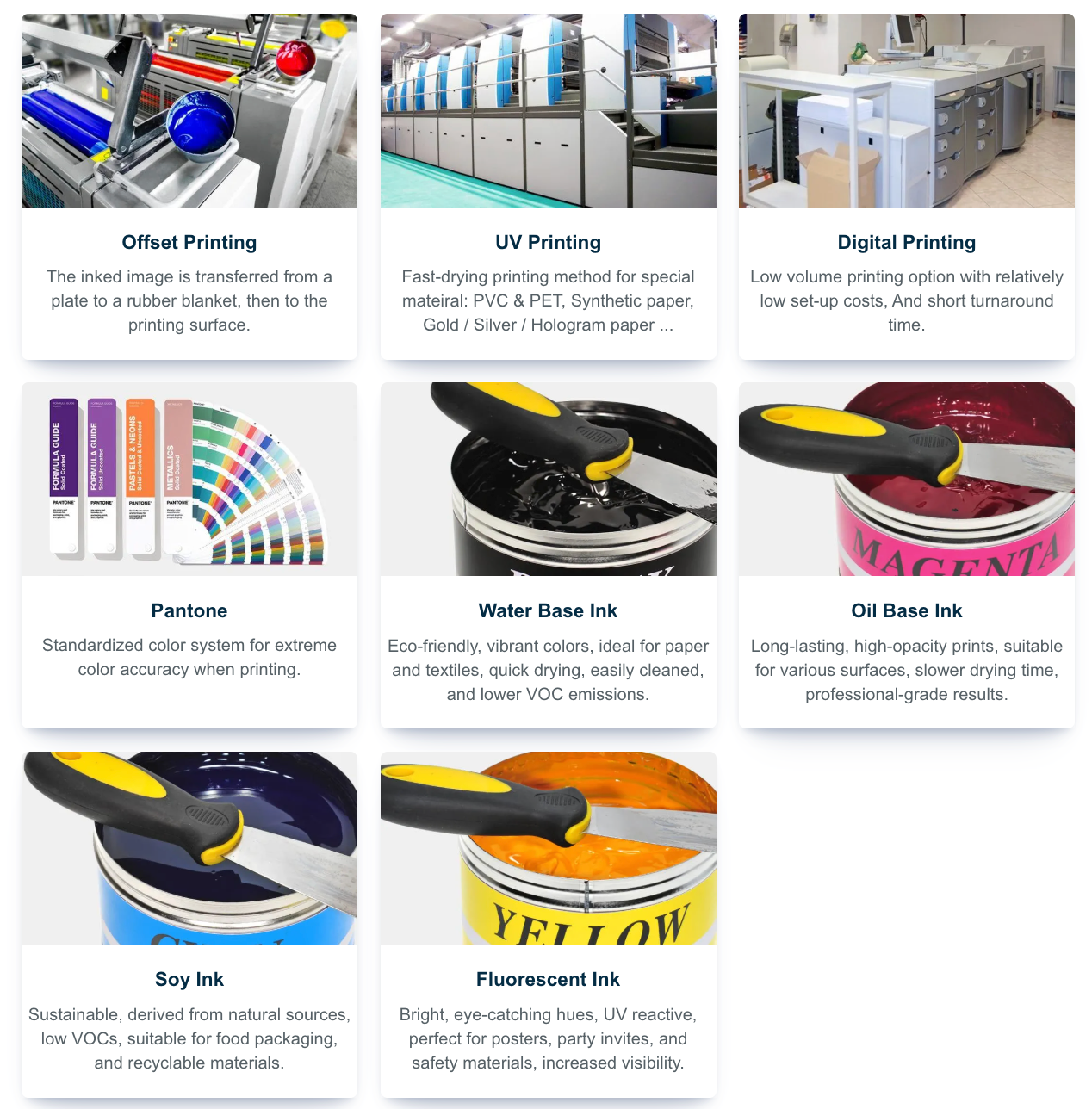
Offset printing is the most widely used technique for producing premium color boxes, especially in large quantities. It works on the principle that oil-based ink and water do not mix.
-
How it works: The image is transferred (or “offset”) from a plate to a rubber blanket, and then onto the cardboard or paperboard. This indirect method allows for printing on slightly textured surfaces.
-
Best for: Long print runs (thousands of units), designs with rich, consistent color, complex graphics, and high-resolution photographs.
-
Pros:
-
Exceptional image quality and color consistency.
-
Cost-effective for large orders.
-
Ability to use custom Pantone (PMS) colors for perfect brand matching.
-
-
Cons:
-
Higher initial setup costs and longer setup time.
-
Not economical for short runs.
-
2. Digital Printing: Speed & Flexibility for Customization
Digital printing is the modern solution for on-demand and short-run printing. It bypasses the need for physical plates, transferring the design directly from a digital file to the substrate using toner or liquid ink.
-
How it works: Similar to your office printer, but on an industrial scale. Popular technologies include HP Indigo and production-grade inkjet printers.
-
Best for: Short to medium runs, personalized or variable data printing (e.g., unique serial numbers), and rapid prototyping.
-
Pros:
-
Minimal setup time and cost.
-
Excellent for last-minute changes and quick turnarounds.
-
Allows for easy customization of each box.
-
-
Cons:
-
Per-unit cost is higher than offset for large quantities.
-
Color range can be slightly less vibrant than offset, though the technology is constantly improving.
-
3. Flexography: The Champion for High-Speed & Packaging Materials
Commonly known as Flexo, this method is a workhorse in the packaging industry. It uses flexible photopolymer plates and is excellent for printing on a wide variety of materials, including corrugated cardboard.
-
How it works: The raised image on the flexible plate is inked by a roller and then pressed directly onto the substrate.
-
Best for: High-volume runs, simple designs, large solid areas of color, and printing on non-paper materials like corrugated fiberboard, cellophane, and plastic.
-
Pros:
-
Very high printing speeds, ideal for mass production.
-
Uses fast-drying, eco-friendly water-based inks.
-
Cost-effective for long runs with simpler designs.
-
-
Cons:
-
Lower image resolution compared to offset.
-
Not ideal for designs with very fine details or subtle gradients.
-
4. Silkscreen Printing: For Texture and Vibrancy
Silkscreen (or screen printing) is a versatile technique that pushes ink through a fine mesh screen. Each color requires a separate screen.
-
How it works: A stencil of the design is created on a mesh screen. Ink is forced through the open areas of the screen onto the box surface.
-
Best for: Short runs, creating a thick, tactile layer of ink, special effects (like metallic or glow-in-the-dark inks), and printing on unusually shaped or rigid boxes.
-
Pros:
-
Produces a very vibrant, opaque, and textured finish.
-
Can print on almost any surface.
-
Excellent for bold graphics and special coatings.
-
-
Cons:
-
A slow process, not suitable for high-volume production.
-
Higher cost per unit.
-
Not efficient for designs with many colors or photographic detail.
-
Choosing the Right Method for Your Brand
So, which method is right for your color box?
-
Need 10,000+ units with a photorealistic design? → Offset Lithography
-
Launching a test run of 500 boxes or need personalized editions? → Digital Printing
-
Producing simple, sturdy shipping boxes in massive quantities? → Flexography
-
Want a luxurious, raised-ink feel for a premium product? → Silkscreen Printing
The Final Touch: Post-Press Finishing
Remember, printing is only half the story. To truly make your box stand out, consider post-press finishing techniques like:
-
Lamination: Adds a protective glossy or matte film.
-
UV Spot Coating: Adds a shiny, raised coating to specific design elements.
-
Embossing/Debossing: Creates a raised or depressed texture.
-
Foiling: Applies a luxurious metallic finish.
In Conclusion
Your color box is a silent salesman. By understanding these different printing methods, you can partner with your printer to select the best technique that aligns with your budget, timeline, and creative vision, ensuring your product makes a powerful first impression.
Comments (0)